
Preventive & Family
Children's Dental Care
Kid-friendly cleanings, sealants, fluoride, and early orthodontic monitoring.
Insurance verified in 60 seconds
- Time
- 30–45 minutes per visit
- Recovery
- None
- Cost
- $65 exam · $82 cleaning · $80 sealant Most plans cover pediatric preventive 100% Annual limits and frequency caps vary (typically 2 cleanings, 1 sealant per tooth, fluoride 1–2 times per year).
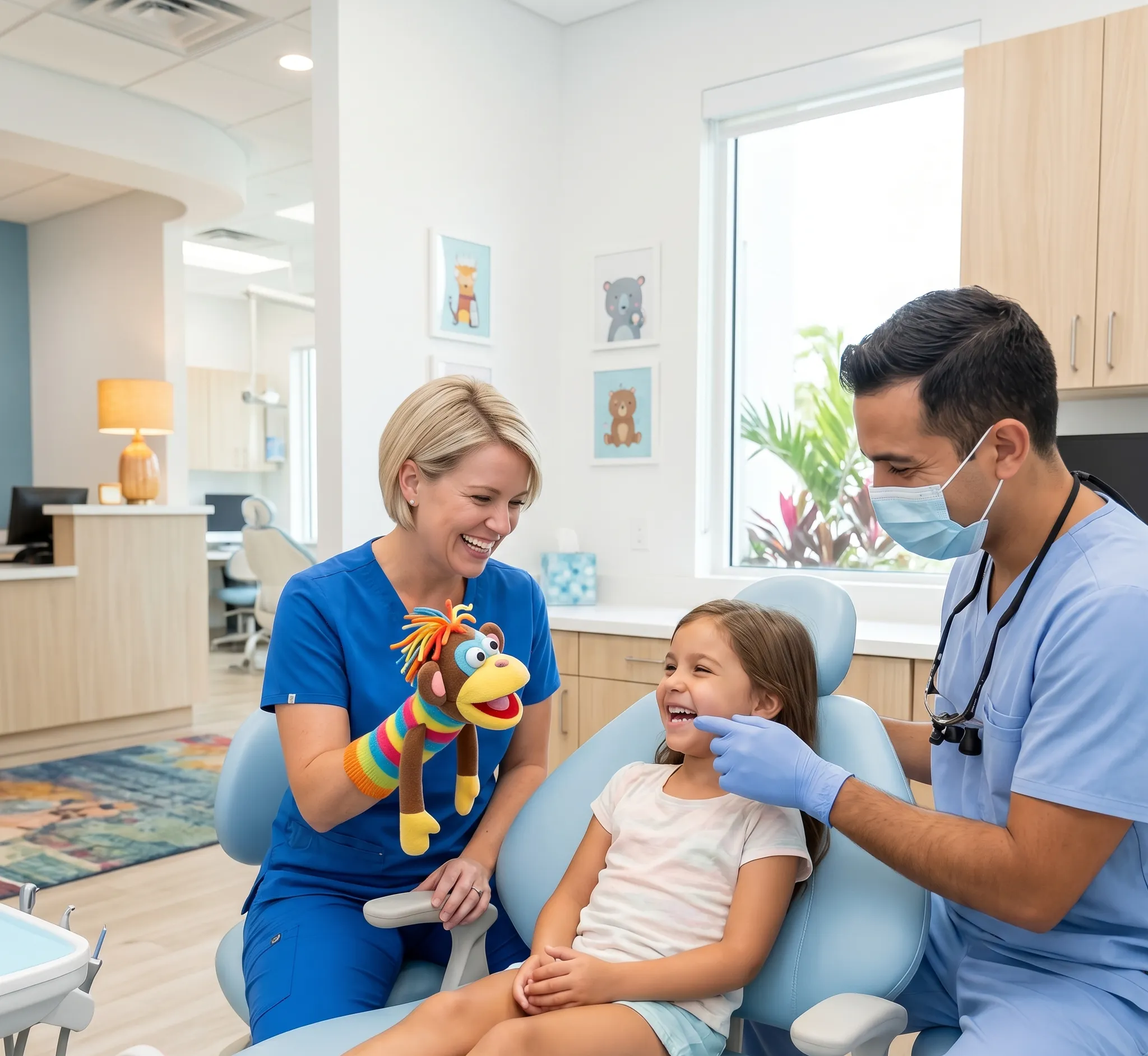
The visit your child has at age 1 shapes how they feel about the dentist at age 30. Royale Dental welcomes children from their first tooth through their teenage years — bilingual, gentle, and unhurried. Our Hialeah office is calm and kid-friendly, with hygienists experienced at making younger patients comfortable in English or Spanish. First visits are low-key and positive on purpose: no drills, no pressure, just a friendly introduction to good habits. Families come to us from Doral, Miami Lakes, Coral Gables, and Westchester for bilingual pediatric dental care.
Visits we offer
- First dental visit — by age 1 or within six months of the first tooth, whichever comes first. See What to Expect at a Child’s First Visit for a parent walk-through.
- Six-month exams and cleanings — sized and paced for kids, with the same diagnostic thoroughness as our adult preventive visits
- Dental sealants — applied to the grooves of permanent molars to block cavities before they start
- Topical fluoride — strengthens developing enamel after every cleaning
- Tooth-colored fillings — when a cavity is found, we treat with composite resin (mercury-free), which bonds to the tooth and matches the tooth color
- Early orthodontic monitoring — we flag bite issues by age 7 so timing is right if intervention is needed
- Custom mouthguards — for kids in contact sports, far better protection than a one-size-fits-all guard from the sporting goods store; note that children in mixed dentition (roughly ages 6–12) will need periodic replacement as permanent teeth erupt and the jaw grows
- Same-day emergency care — for falls, sports injuries, or unexplained pain
Why early visits matter
Tooth decay is the most common chronic disease of childhood in the U.S., according to the CDC — and it’s almost entirely preventable. Catching the first signs of decay early lets us treat with a small filling or even reverse it with fluoride, instead of waiting until a baby tooth needs a crown or extraction. Early visits also build the muscle memory of a calm dental experience: the child who’s been coming since age one rarely develops the dental anxiety that drives adults to delay care.
The first visit is also where we coach parents on what we see — from how to hold the toothbrush, to bedtime bottle habits, to whether a tongue tie is affecting feeding. It’s short, it’s friendly, and it’s the foundation of decades of good oral health.
How we make visits comfortable
- Tell-show-do approach — every instrument is explained, shown, and let the child touch it before we use it
- Bilingual care — explanations and reassurance in English or Spanish, whichever the child prefers
- Short visits when needed — we don’t push past where a child is willing to go; we’d rather end early on a positive note than push through a meltdown
- Parents welcome in the operatory — especially for first visits and younger kids
- Distraction tools — TVs on the ceiling, sunglasses to dim the light, a chosen movie
- Reward at the end — a small gift and a brushing chart for home
Scheduling your child’s first visit? The first appointment is friendly and low-key — no drills, no pressure, just a tooth count and a positive introduction. Most insurance covers preventive pediatric care at 100%; bring the card and we’ll verify in 60 seconds.
What parents can do at home
Home care is half the equation. The other half is what we do at the office. We coach parents on:
- Brushing technique. Twice a day from the first tooth — a smear of fluoride toothpaste for ages 0–2, and a pea-sized amount from age 3 onward (per current ADA and AAPD guidance). A gentle electric brush starting around age 4 makes the routine easier.
- Flossing. Start as soon as two teeth touch — usually around age 2–3. Floss picks make it manageable.
- Bottle and sippy cup habits. No bottle in bed past age 1. Bottle decay is the most common preventable cavity issue we see in toddlers.
- Snacking and drinks. Limit sticky and sugary snacks to mealtimes; rinse with water after. Avoid juice and sports drinks between meals — sip-and-graze is the worst pattern for enamel.
- Nutrition. Calcium, phosphorus, and vitamin D support tooth development. Nutrition for Stronger Teeth breaks down the food-side of dental health for the whole family.
- First visit by age 1. Sooner is better than later.
Building lifelong habits
Children who associate the dentist with calm, painless visits are the adults who keep up with checkups and avoid expensive restorative work decades later. Our goal at every pediatric visit is the long game: healthy teeth, healthy gums, and a kid who’s happy to come back. The investment in regular checkups in childhood pays off across a lifetime of fewer cavities, less anxiety, and lower dental bills.
Cost and financing
Most dental plans cover preventive pediatric care — exams, cleanings, sealants, fluoride, and routine x-rays — at 100% twice a year. We bill insurance directly. Bring the card to your child’s first visit and we’ll verify benefits in about 60 seconds, so there’s no surprise at checkout.
Self-pay pricing for families without insurance: $65 for a child’s exam with X-rays, $82 for a child cleaning, $80 per tooth for a sealant, and $67 for topical fluoride. Tooth-colored fillings on baby or permanent teeth start at $120 depending on the surface count.
Common questions
Frequently asked about Children's Dental Care
-
When should my child have their first dental visit?
By their first birthday — or within six months of the first tooth coming in, whichever comes first. The American Academy of Pediatric Dentistry (AAPD) and the ADA both make this recommendation. The first visit is short and friendly — we count teeth, check development, screen for early decay, and give parents a road map for home care. Early visits also help kids associate the dental office with a positive routine. -
Do you do sealants and fluoride?
Yes. Dental sealants are thin protective coatings we apply to the chewing surfaces of permanent molars to fill in the natural pits and grooves where cavities most often start. According to the CDC, sealants reduce the risk of cavities in molars by about 80% in the years right after placement. Topical fluoride at every visit strengthens developing enamel. Both are evidence-based, recommended by the AAPD, and covered by most insurance plans. -
My child is anxious about the dentist — how do you handle that?
We move at the child's pace. We explain everything in age-appropriate language ("tell-show-do"), let them hold the mirror and the suction, and never rush. For very anxious children we break treatment into shorter visits or invite parents into the operatory. Our team is bilingual, so kids and parents get explanations in the language they're most comfortable with. The goal is a child who looks forward to coming back, not one who has to be coaxed. -
What's a knocked-out baby tooth versus a knocked-out permanent tooth?
A knocked-out permanent tooth is a true emergency — call us within minutes, store the tooth in milk, and follow the first-30-minutes guide. A knocked-out baby tooth, on the other hand, should not be re-implanted — it can damage the developing permanent tooth underneath. Either way, call us same-day so we can evaluate, manage pain, and monitor the area until the permanent tooth erupts. -
When should my child see an orthodontist?
The American Association of Orthodontists recommends an evaluation by age 7 — early enough to spot bite issues that benefit from interceptive treatment, but most kids won't need anything done until later. We monitor jaw development at every six-month visit and refer to an orthodontist if we see something that warrants attention. Most orthodontic treatment, including Invisalign Teen, starts in the early teen years. -
Does my child need dental X-rays?
X-rays are an important diagnostic tool, not a routine formality. We take bitewing x-rays once a year for most children to detect cavities between teeth that can't be seen with a visual exam. A panoramic x-ray may be taken every 3–5 years to monitor jaw development, tooth eruption, and spacing. We use low-dose digital x-rays — the exposure is very low. We always weigh the diagnostic benefit against the exposure and will explain the recommendation before taking any x-rays. -
How do I know if my child has a cavity?
Many early cavities have no symptoms — which is why the six-month exam is the most reliable way to catch them early. Signs that may indicate a cavity include a visible white spot, brown spot, or pit on a tooth; sensitivity to sweets or cold that lingers; a tooth that hurts when biting; or your child pointing to a specific tooth. If you notice any of these, call us for a focused exam rather than waiting for the next scheduled visit. Treating a cavity when it's small is faster, easier, and less expensive than waiting.
Also at Royale Dental
Related Services
-
Preventive & Family
Teeth Cleaning & Dental Exams
Six-month checkups, digital x-rays, oral cancer screening, and gentle professional cleaning.
Learn more → -
Restorative & Urgent
Emergency Dentistry
Same-day urgent dental care for pain, broken teeth, and lost restorations.
Learn more → -
Restorative & Urgent
Gum Disease Treatment
Treat bleeding gums and stop the progression of periodontal disease.
Learn more →
Trusted in Hialeah
Why families choose Royale Dental
10+ years
Caring for Hialeah since 2016
4.9
Google rating · 54 reviews Read patient reviews
Most insurance
Verified in 60 seconds at the visit
” Very profesional attention and quality. ”
” Excelente servicio 👏👏 ”
” Super ”
” Súper recomendado muy amables y excelentes servicios. ”
” Mi experiencia muy buena un trato bien amable de todo el personal muy satisfecha ”
Time for Children's Dental Care?
Most insurance covers preventive care 100%. Bilingual care in Hialeah.
Insurance verified in 60 seconds